
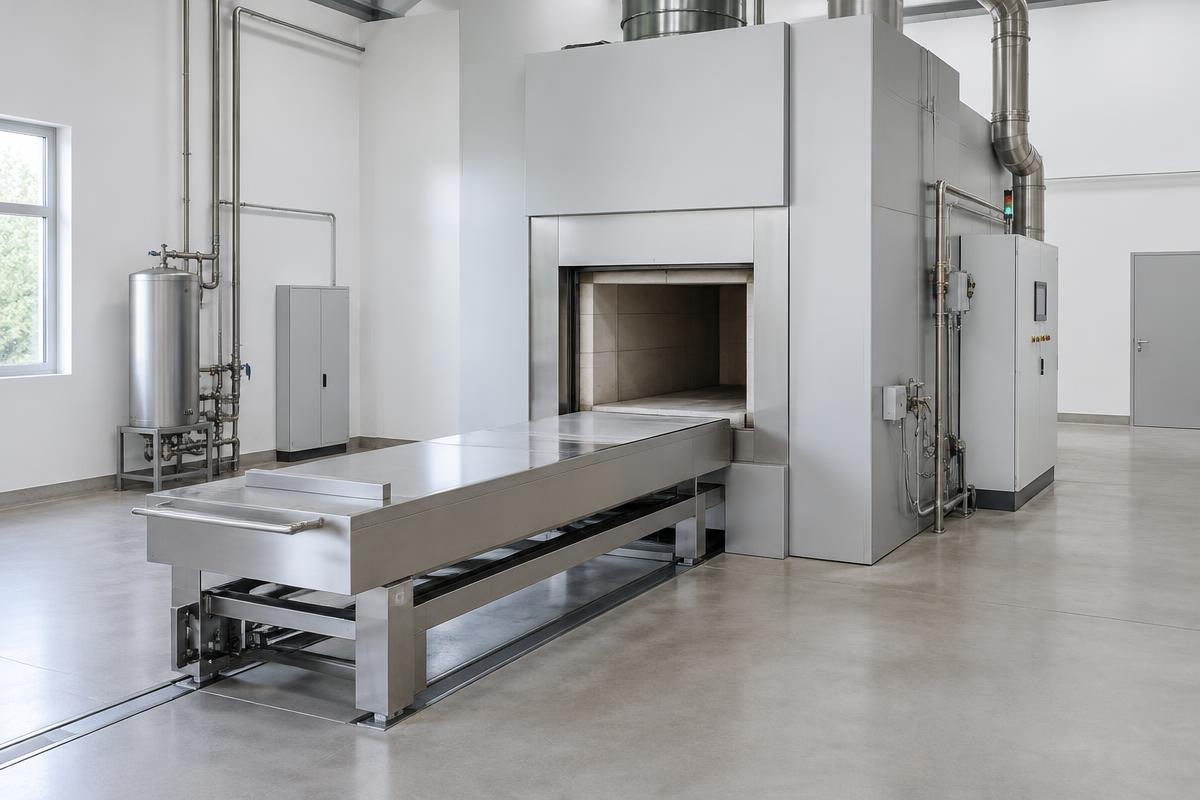
Human cremators
Primary and secondary chamber cremators, gas or electric.
Typical buyers: Crematoria, funeral homes, municipalities
Equipment
From charging machine to cremulator: understand every component of a modern cremation line before you compare suppliers.
Primary and secondary chamber cremators, gas or electric.
Typical buyers: Crematoria, funeral homes, municipalities
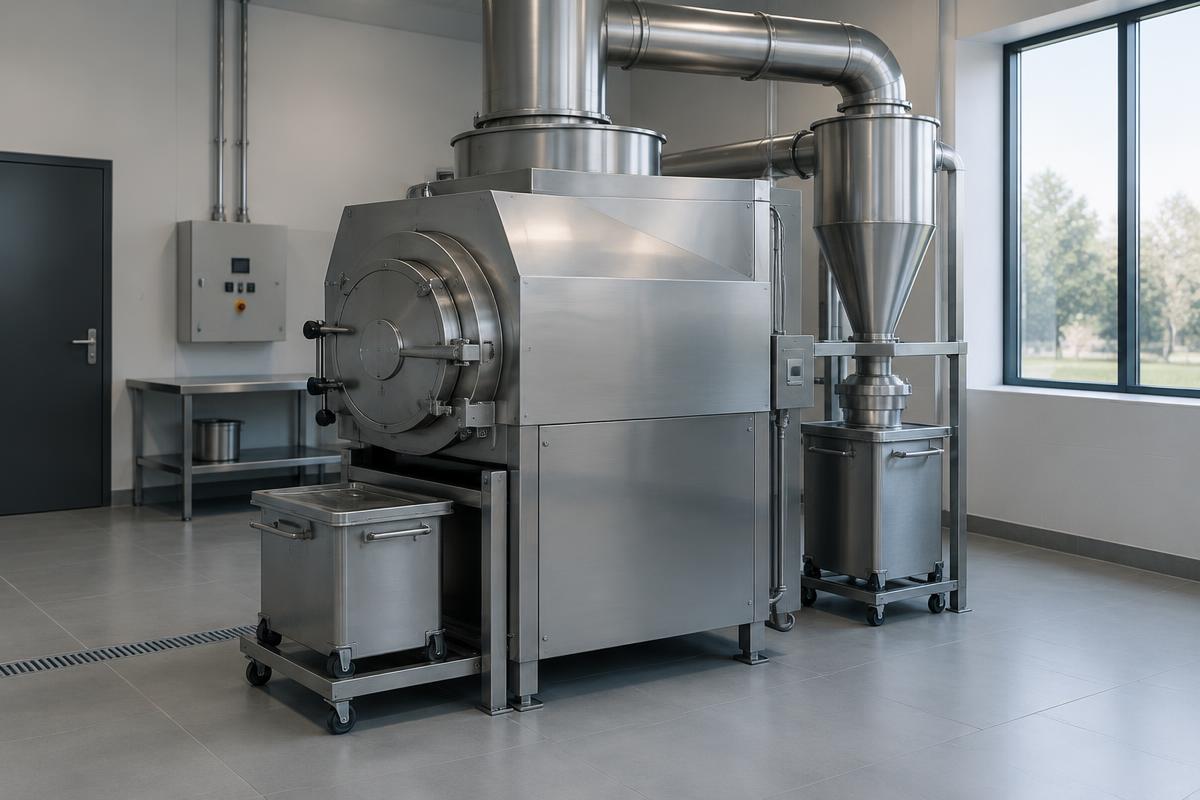
Process cremated remains into uniform ash.
Typical buyers: Every crematorium, human and pet
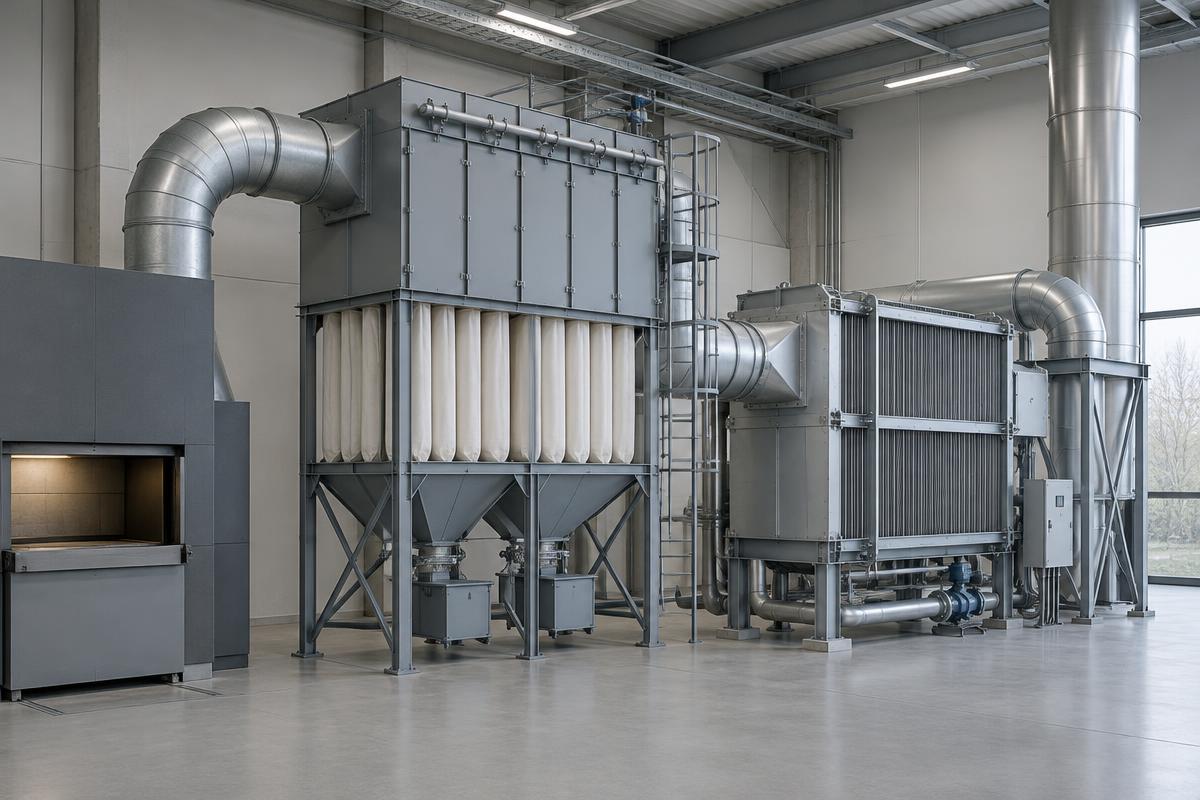
Clean flue gas: mercury, dioxins and dust.
Typical buyers: Crematoria facing emission limits
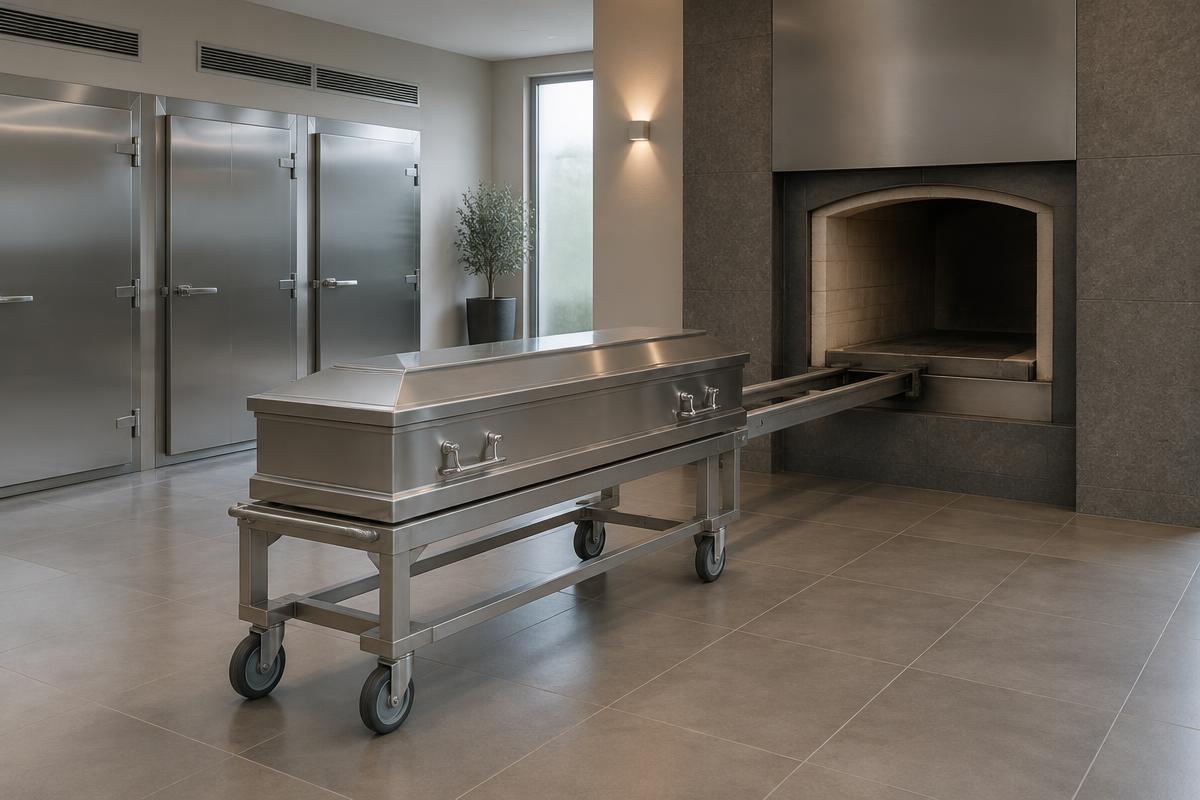
Charging, cold storage and ash cooling.
Typical buyers: Crematoria improving workflow and dignity
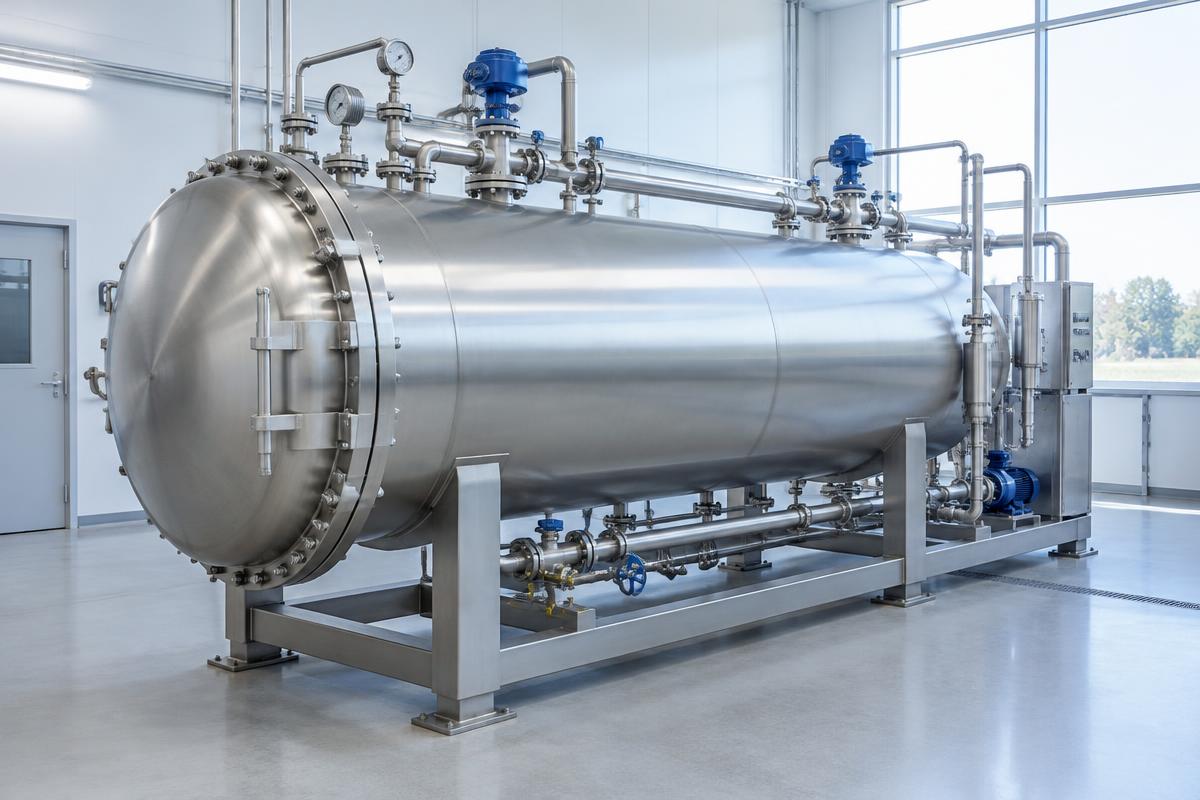
Alkaline hydrolysis systems, also called resomation or aquamation.
Typical buyers: Funeral homes, crematoria, pet aftercare

Pet cremators, multi-chamber units and pet aquamation.
Typical buyers: Pet crematoria, vet practices, funeral homes
AI-generated illustrative imagery; not photographs of specific products.
Most crematoria need a cremator, a processor and filtration; water cremation and pet cremation are separate paths. Answer six questions and we will suggest a technology and matching manufacturers.
A crematorium is more than a cremator. A complete cremation line includes refrigerated storage, coffin handling and charging, the cremator itself, flue gas cooling and filtration, heat recovery, ash cooling, metal separation and processing, plus the control and data systems that tie everything together. Increasingly, crematoria also consider water cremation systems alongside or instead of flame cremation.
Understanding each component helps you specify what you need, compare proposals and plan for future upgrades. The guides below explain each category in plain language, with the questions to ask suppliers.
The cremator is the central investment. Choices include gas, LPG, oil or electric heating, standard or bariatric chambers, single or double-ended designs and different refractory concepts. Energy efficiency, emissions and refractory life largely determine long-term cost.
After cremation, bone fragments are processed into fine ash. Processors differ in speed, noise, dust control and robustness. Integrated stations combine cooling, metal separation and processing for efficiency and staff safety.
Flue gas cleaning removes mercury, dioxins, particulates and acid gases. Abatement is mandatory in many European countries and increasingly expected elsewhere. It also enables heat recovery into buildings or district heating.
Charging machines, coffin trolleys, lifts, refrigerated storage and ash cooling protect staff and support dignified operations. They are often underestimated in budgets but influence daily working life more than any other equipment.
Alkaline hydrolysis systems use water, alkali and heat instead of flame. They require different infrastructure, including drainage and wastewater consent, and are legal only in certain jurisdictions. See our dedicated water cremation guide.
Pet cremators range from small companion animal units to equine hearths. Multi-chamber designs allow individual cremations at scale. Pet water cremation is also widely available. See our pet cremation guide.
Components interact. The cremator determines flue gas conditions for filtration; filtration determines heat recovery potential; handling equipment must match chamber dimensions; processors must keep pace with cremator throughput. Specifying the full line together, even if bought in phases, avoids costly incompatibilities.
When tendering, decide whether you want a single supplier responsible for the entire line or separate lots for cremators, filtration, processors and handling. Single-source contracts simplify accountability; separate lots may reduce cost and allow best-in-class choices. Either way, define interfaces clearly.
Consider also the building: ceiling heights for filtration plant, floor loading for cremators, ventilation, fuel or electrical supply capacity, drainage for water cremation, and access for future replacement. Early coordination between architect, engineer and equipment supplier prevents expensive changes later.
Finally, plan for the future. Emission limits tend to tighten, volumes change and new technologies such as electric cremation and alkaline hydrolysis evolve. Leaving space and capacity for upgrades protects your investment over its twenty-year life.
Most projects begin with the cremator and filtration decision, because these determine building size, utilities and permits. Handling equipment and processors are specified once chamber dimensions and throughput are known. Refrigeration capacity follows from volumes and expected waiting times. Water cremation, if included, needs early input on drainage and wastewater consent. Coordinating these decisions in one design process is the most reliable route to an efficient, dignified crematorium.
Every component needs care: refractory inspections and relines, burner servicing, control calibration, filter bag replacement, processor wear parts, refrigeration servicing and handling equipment safety checks. A single preventive maintenance plan covering the whole line, ideally with one coordinating contractor, reduces downtime and simplifies compliance records. Ask suppliers whether they can maintain equipment from other manufacturers as well as their own.